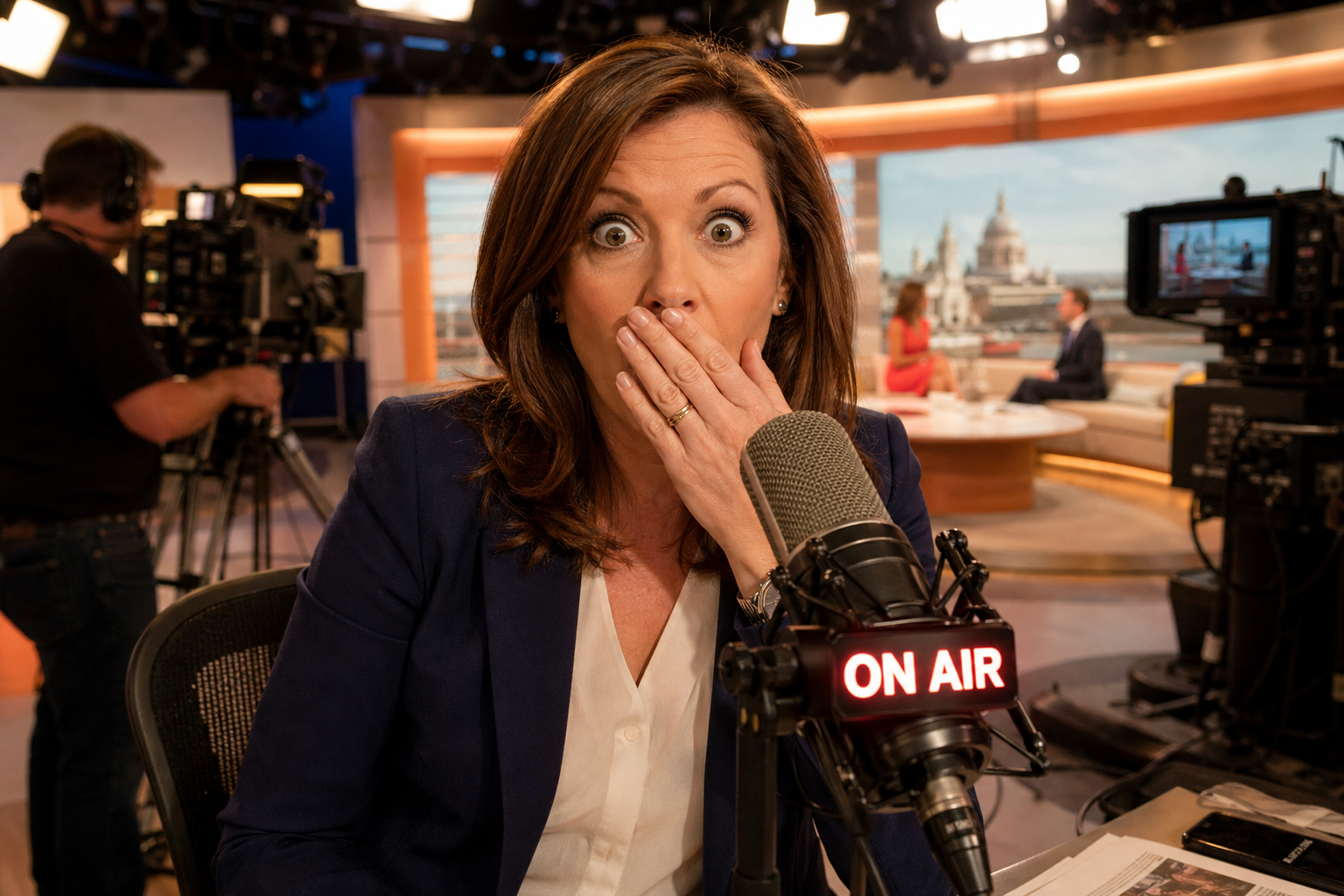
There is a particular kind of television moment that no producer plans for, no script editor anticipates, and no media training can fully prevent. It arrives without warning, lasts a few seconds, and then lives on the internet essentially forever. It is, of course, the hot mic moment — and British broadcasting has produced some genuinely unforgettable ones.
What makes these clips so enduring is not the embarrassment, but the humanity. For a medium built on carefully managed presentation, the accidental aside strips back the polish and reveals something entirely real. Audiences, it turns out, respond rather warmly to that.
A Swear Word Slip on BBC Radio 1
One of the more recent examples came from broadcaster GK Barry during a live BBC Radio 1 show. Believing her microphone had already been switched off at the end of a segment, she let a colourful word slip — only for it to go out across the airwaves to thousands of listeners. To her credit, she realised immediately and followed it with a swift, good-humoured apology.
Audiences found the moment more endearing than scandalous, and clips of it circulated widely on social media within hours. Rather than denting her reputation, the incident cemented a perception that had always been part of her appeal: that what you see on air is what you get off it, too.
BBC Breakfast's Accidental Behind-the-Scenes Moment
Morning television is particularly vulnerable to technical mix-ups, given the pace at which segments are produced and the number of microphones active at any one time. During one edition of BBC Breakfast, a brief audio fault meant viewers at home heard a conversation happening off-camera rather than the presenters on set.
A crew member could be heard asking a colleague whether her top looked right under the studio lights — a perfectly ordinary exchange that was never meant to leave the production floor. The presenters handled the moment smoothly once they became aware, but the clip became a popular reminder of just how much quiet chatter goes on behind any polished broadcast. The incident also prompted a minor wave of affection for the crew members who usually remain entirely invisible to viewers.
A Daytime Chat Show Host and the Unaired Opinion
During a commercial break on a popular ITV daytime programme, one of the show's regular hosts leaned toward a colleague and made a candid remark about a segment that had just aired — something along the lines of calling it "the most chaotic five minutes of television" she had ever sat through.
Unfortunately, her clip microphone had not been muted by the sound desk. The comment reached the studio floor audio feed, and while it did not go out on broadcast, it was picked up by monitors in the green room where the next guest happened to be waiting. The producer later described it as "a perfectly honest review delivered at exactly the wrong time." The guest in question apparently took it in good humour.
The Weather Presenter Who Couldn't Stop Laughing
Weather forecasts are rarely considered prime territory for comedy, but one regional BBC presenter managed to turn a routine handover into an unexpected highlight. Just after finishing her forecast and assuming the camera had cut away, she burst into laughter at something a colleague had whispered off-screen. The camera had not yet cut — and neither had her microphone.
Viewers were treated to fifteen seconds of uncontrolled giggling before the studio regained composure. The clip was later shared by the BBC's own regional social media accounts, attracting hundreds of thousands of views and almost universally warm comments. It remains one of the rare examples of a broadcaster's own institution cheerfully amplifying an on-air blooper — a sign that even the BBC recognises when something unplanned is simply better television.
Why Hot Mic Moments Keep Happening
In live television and radio, microphones are often kept active longer than presenters expect. Sometimes the cause is a delayed cut from the sound desk; sometimes it is a technical fault or a miscommunication between the floor manager and the control room. Clip microphones, in particular, remain powered until someone physically switches them off — and in a fast-moving studio, that step is easy to miss.
When a presenter assumes the mic is dead but it is still live, the result is what broadcasters call a "hot mic" moment. The term itself comes from the world of radio, where a live microphone in a silent studio is sometimes described as "running hot." In television the phrase migrated naturally, given the same basic failure mode.
Production teams do run microphone checks and implement cut procedures, but live television operates on tight timings and involves dozens of moving parts. The honest truth is that in a live studio, the margin for error is narrow, and some moments will always slip through.
Better Than Anything That Was Planned
For audiences, these unscripted seconds can be hilarious, humanising, or occasionally awkward. For the presenters involved, they are usually unforgettable — and almost always make better television than anything that was planned. In a media landscape where authenticity is the commodity everyone is chasing, hot mic moments are, ironically, among the most genuine things that ever make it to air.
They also carry a quiet lesson about the nature of live broadcasting: it is a medium where the gap between the managed and the real is, sometimes, just one muted mic button away.